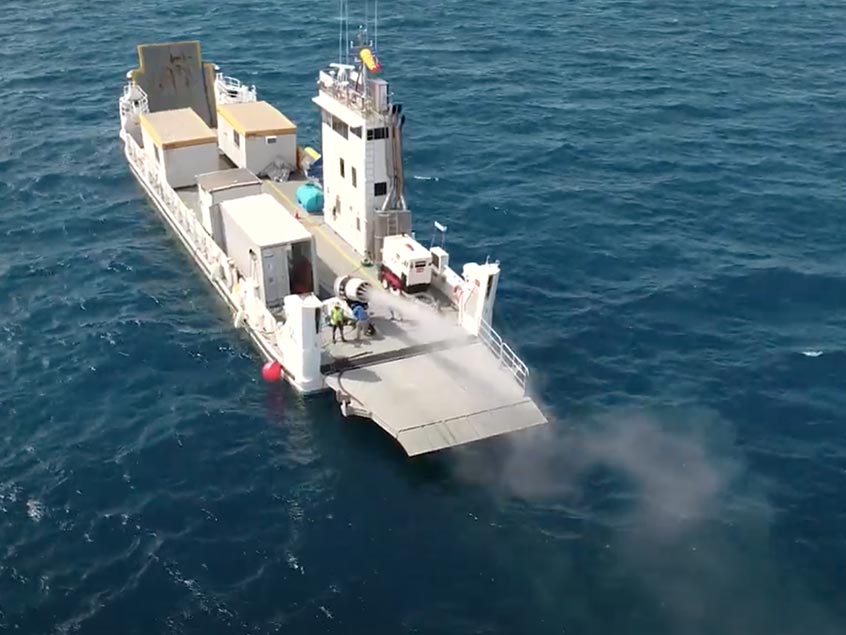
The RRAP R&D Program is designed to address critical knowledge gaps and break through the scientific and engineering bottlenecks to support the restoration and adaptation of coral reefs on the Great Barrier Reef, across thousands of square kilometres.
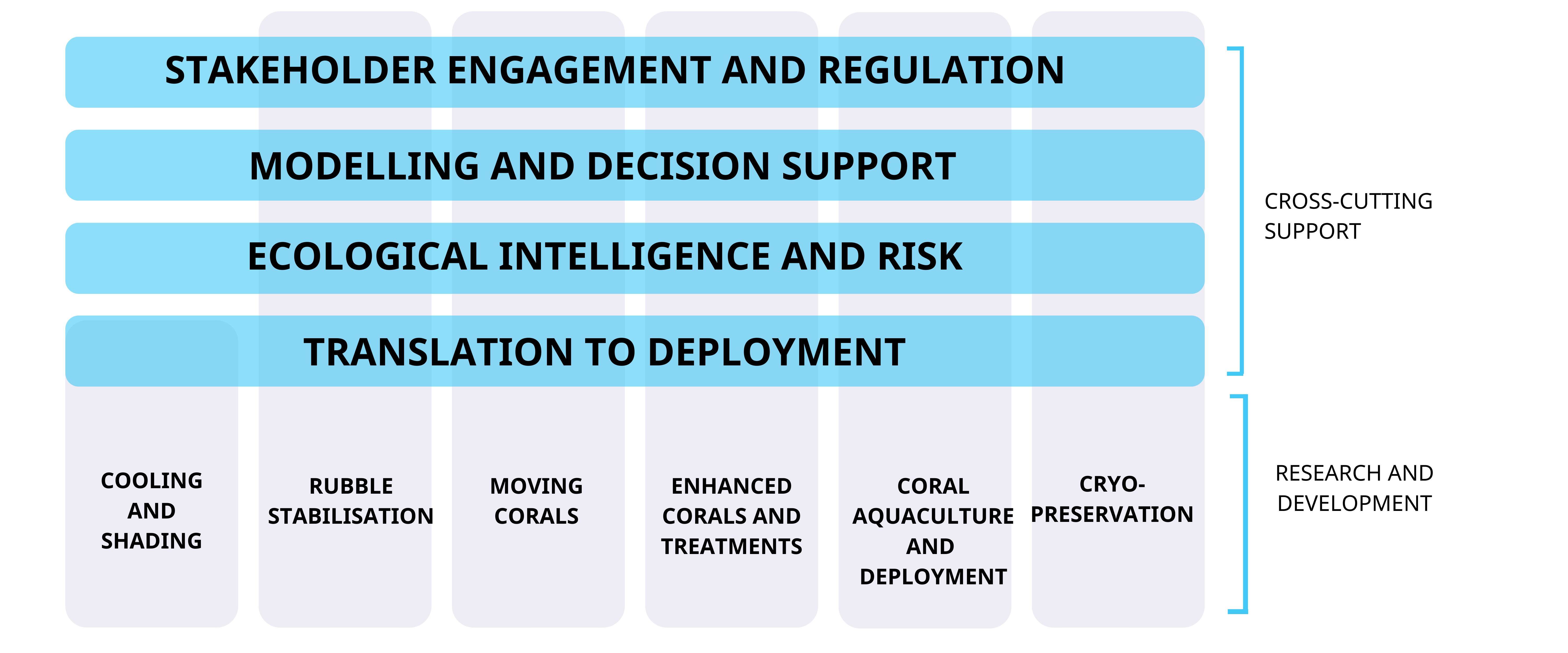
The multi-disciplinary program focuses on accelerating the development and implementation of a suite of innovative interventions, and tackles both technological dimensions as well as enabling elements such as governance and social license, modelling and decision support, risk and regulation, Traditional Owner and stakeholder engagement and partnerships.
The R&D Program is delivered by a consortium of partners each bringing unique and complementary capabilities. Partners include the Great Barrier Reef Foundation, the Australian Institute of Marine Science, CSIRO, James Cook University, the University of Queensland, Southern Cross University and Queensland University of Technology.
The Program’s R&D is designed to be deployed at unprecendented scales and be responsive to a range of possible climate outcomes.
Research is integrated, with a three-point approach:
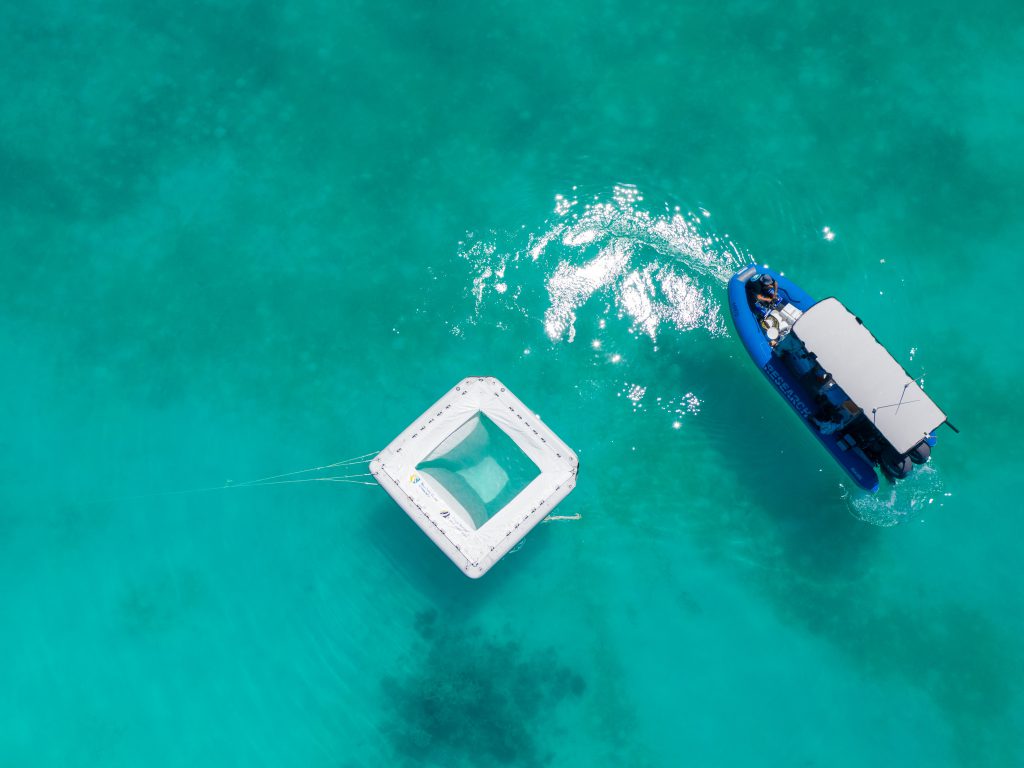
cooling and shading the Reef to help protect it from the impacts of climate change
assisting Reef species to adapt to the changing environment
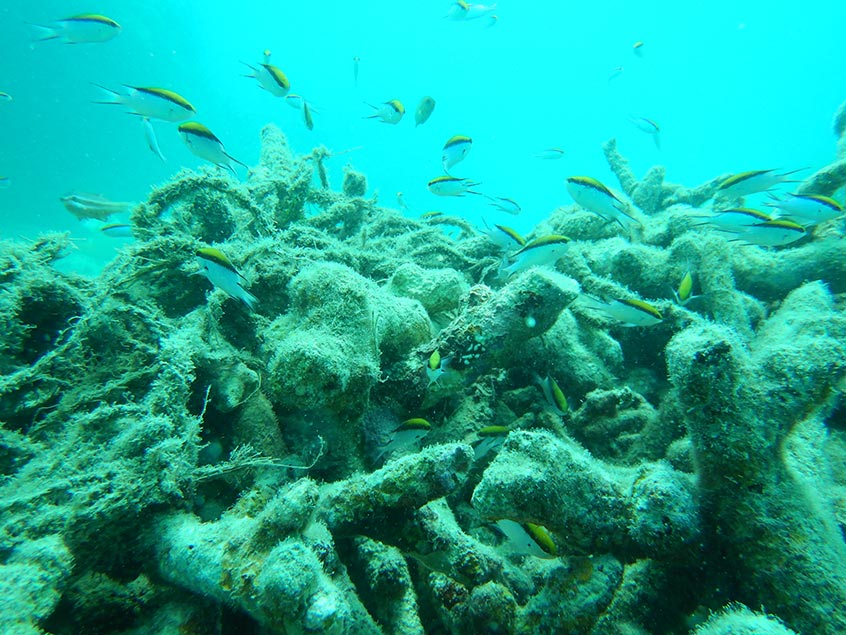
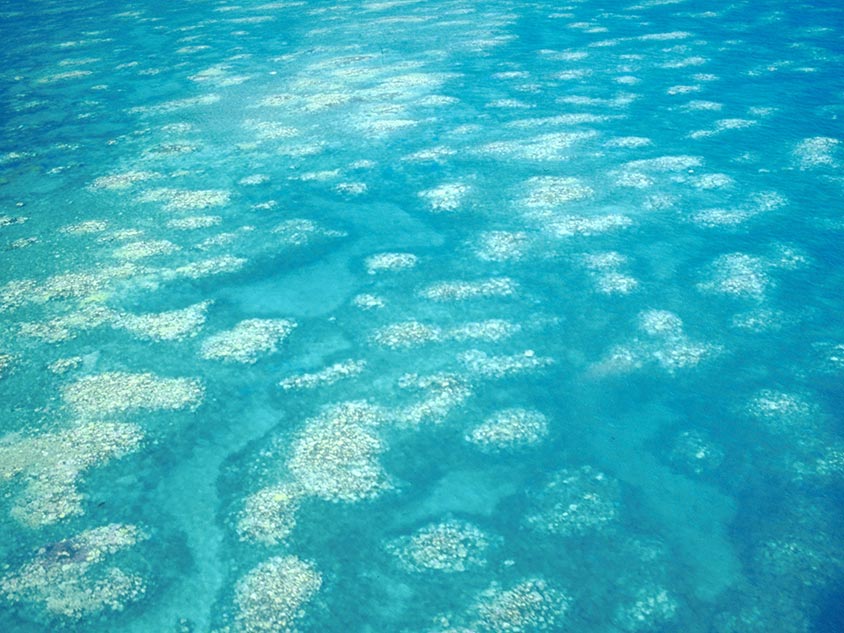
supporting natural restoration of damaged and degraded reefs.
We use cookies and other identifiers to help improve your online experience. By using our website you agree to this. To learn more, including how to change your settings, see our cookies policy.